
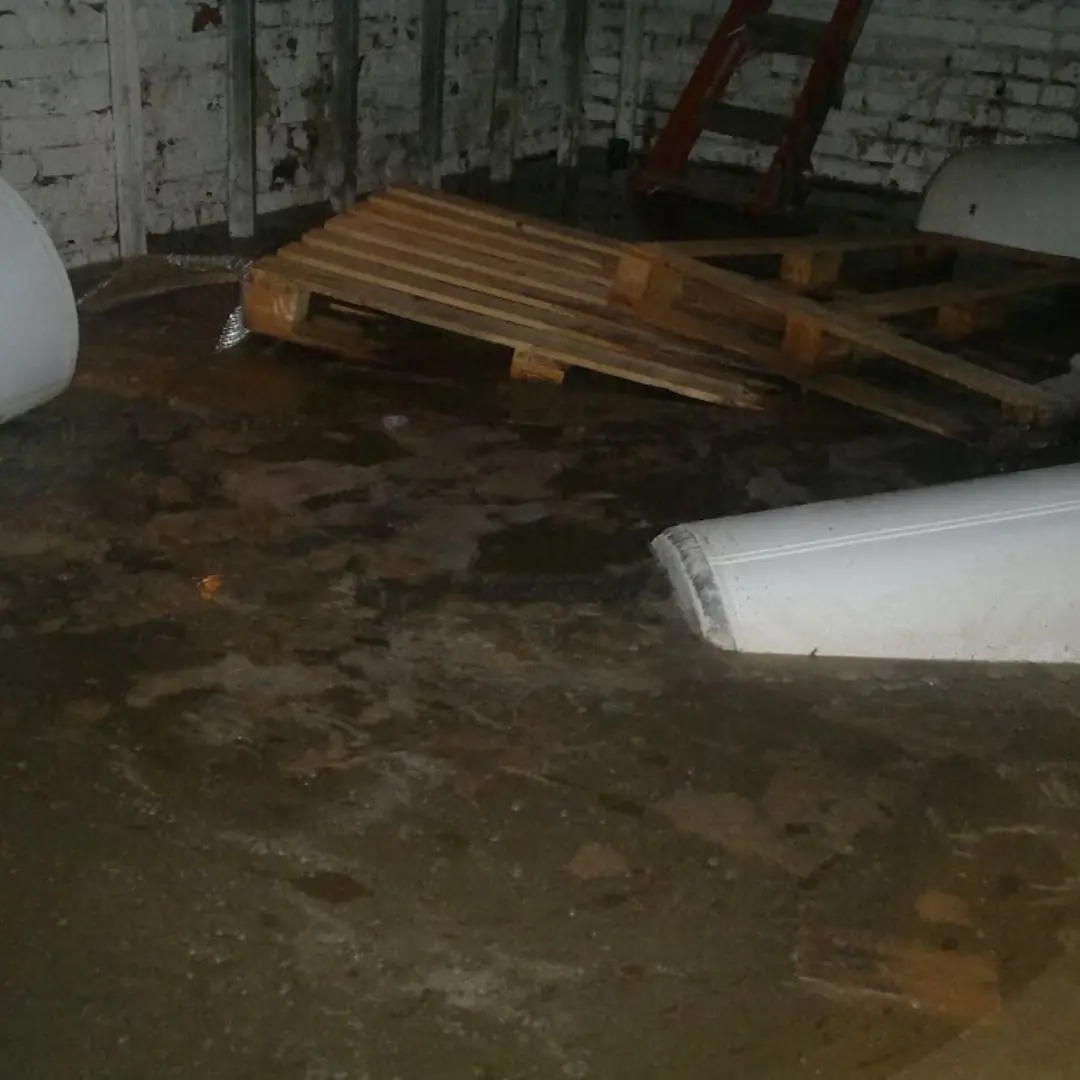
It is July in Toronto, and your air conditioner is running hard. It's also silently dumping water into your basement, and you might not know it until the smell hits or your basement floor is soaked.
This happens to hundreds of GTA homeowners every summer. The culprit is usually not a flood, a burst pipe, or a sewer backup. It's the condensation line inside your air conditioning system, and when it gets blocked, it becomes a water damage emergency that costs thousands to clean up.
What is the condensation line and why does it back up?
When your air conditioner runs, it pulls moisture out of the air inside your home. That water has to go somewhere. It collects in a pan under the indoor air handler unit (usually in your basement or utility room) and drains out through a small pipe called a condensation line.
This line is only about the diameter of a garden hose. It gets clogged easily. Algae grows inside it. Dust accumulates. A bent or frozen line traps water. Sometimes the drain simply slopes the wrong way and water pools instead of flowing out.
Once it backs up, the pan under your air handler overflows. Water starts pooling in your basement utility area and spreading outward. A running air conditioner in 30-degree weather can generate 5 to 10 litres of condensation water per day. That is a lot of water if the drain is blocked.
Why July matters and why you might not notice until it is too late
July is peak air conditioning season in Toronto and the GTA. Your AC is running constantly, especially if you have a heat wave. That is exactly when a plugged condensation line does the most damage because your system is producing the most water.
The problem is often hidden. If your air handler is in a finished basement or behind a closed door in a utility closet, you might not see the water pooling. You smell something musty first. Or you notice dampness on a nearby wall. By that point, the water has already been sitting for hours or days, and mould is starting to grow.
The signs to watch for right now
Check your basement immediately if any of this sounds familiar:
- A musty, damp smell coming from the utility room where your air handler is located
- Water pooling or dampness on the floor near the AC unit
- Visible water dripping from the condensation line itself
- Rust stains or mineral deposits on the pan under the air handler
- Bubbling or peeling paint on basement walls near the air handler
- A second basement space (storage room, laundry area) that smells damp even though it is not near any obvious water source
In Mississauga, Vaughan, Markham, and Scarborough, we get calls about this almost every July. The pattern is always the same: the homeowner noticed something off but waited a few days before calling, and by then mould remediation on top of water damage extraction was a much bigger bill.
What to do right now if you suspect your AC is leaking
First, turn off your air conditioner. Go to the thermostat and set it to off. If the condensation line is backed up and the system is still running, you are adding gallons more water to the problem.
Then locate the air handler unit and the overflow pan. In most Toronto homes, this is in the basement near the furnace or in a utility closet. Look at the pan underneath. Is it full? Is water overflowing from it? Is there a condensation line (a clear or white plastic tube) running down from the unit? If it is wet or pooled at the outlet, that is your confirmation.
Use towels or a shop vac to stop the water from spreading further. Move any boxes, tools, or valuables away from the wet area.
Call an HVAC technician. A clogged or frozen condensation line is not something to fix yourself. The fix is usually simple (clearing a blockage, adjusting the line slope, installing a secondary drain pan), but it needs a professional to do it right. If it is after hours, call an emergency HVAC service. Summer is their busy season, but getting this fixed today is worth the cost.
Do not skip the water damage restoration step
Once the HVAC technician has the line cleared and your AC is fixed, you are not done. You still have water damage to deal with.
AC condensation is clean water (no sewage, no dirt), so it looks harmless. But mould starts growing in damp drywall, insulation, and subflooring within 24 to 48 hours. A basement that looks dry on the surface can be wet inside the walls.
Call a water damage restoration crew the same day the water starts. We can deploy fans and dehumidifiers to dry out the entire basement, not just the surface. We use moisture meters to find hidden water inside walls and under flooring. Catching this early prevents a $10,000 mould remediation job.
Water damage restoration in Oakville, Richmond Hill, Etobicoke, and North York follows the same principle: move fast and dry thoroughly. The faster you start, the less damage spreads.
How to prevent this from happening again
After you have recovered from this water damage, take a few preventive steps:
- Have your HVAC system serviced every spring. A technician will inspect the condensation line, check for blockages, and make sure the drain pan is clear.
- Install a secondary drain pan under the air handler. If the main line backs up, the secondary pan catches the overflow. It costs $200 to $400 and can save you from a complete basement flooding.
- Check the condensation line outlet in summer. Walk outside and look where the line exits your house. If water is not coming out, the line is probably blocked. Call your HVAC tech before it backs up inside.
- Keep the area around the air handler clear. Dust and debris get sucked into the drain line more easily if the unit is surrounded by clutter.
Insurance and restoration
AC condensation water damage is usually covered under Ontario home insurance as sudden and accidental water damage. Call your insurance company right after you call the HVAC technician and the restoration crew. Most policies allow direct billing to the insurer, so you are not paying out of pocket while you wait for reimbursement.
Document everything with photos and video before anyone touches anything. This is your proof of the damage for the insurance claim.
The bottom line
AC condensation line backups are one of the fastest water damage situations we see in the GTA. It is not dramatic like a burst pipe or a sewer backup, but it moves just as fast and causes just as much damage if you do not act immediately.
If you are in the middle of this right now, the steps are simple: turn off the AC, call an HVAC tech, and call a restoration company. The faster you move, the less you will spend.
If you need water damage restoration in Toronto, Mississauga, Vaughan, or anywhere across the GTA, call us at 647-563-9966. We handle AC water damage all summer long, and someone picks up every time, any hour.
The Preferred Group
IICRC Certified restoration team. Toronto-based, working across the GTA since 2006. 6,000+ projects under our belt.