
Flood Restoration
Flooded basement, burst pipe, backed-up drain. We find all the water, dry it out properly, and deal with your insurance.
Flood restoration in Toronto and the GTA
Water damage gets worse the longer you leave it. What looks like a small flood on the surface can mean wet drywall, wet insulation, or a wet subfloor. Mould starts growing within 24 to 48 hours, even when they look fine from the outside.
We use moisture meters and a thermal camera to find water that has travelled into walls, under floors, and anywhere else it ended up. We bring in the right equipment to properly dry the affected areas.
We work with your insurance company from the first call. You do not have to chase anyone or figure out the claim yourself.
Common causes we handle
- Sewer backup and drain overflow
- Burst or leaking pipes
- Sump pump failure
- Basement flooding from heavy rain
- Appliance leaks (dishwasher, washing machine, hot water tank)
- Roof leaks and damaged eaves troughs
- Foundation water intrusion
What to expect
What happens after you call
We answer
You reach a person, not a voicemail. They can get a crew out to you anywhere in the GTA.
Inspection
We find where the water travelled. Water damage isn't always visible without the proper tools. We use moisture meters and infrared cameras to track damage within the walls, under floors, and anywhere else it has travelled. What remains wet could become mould.
Scope of work
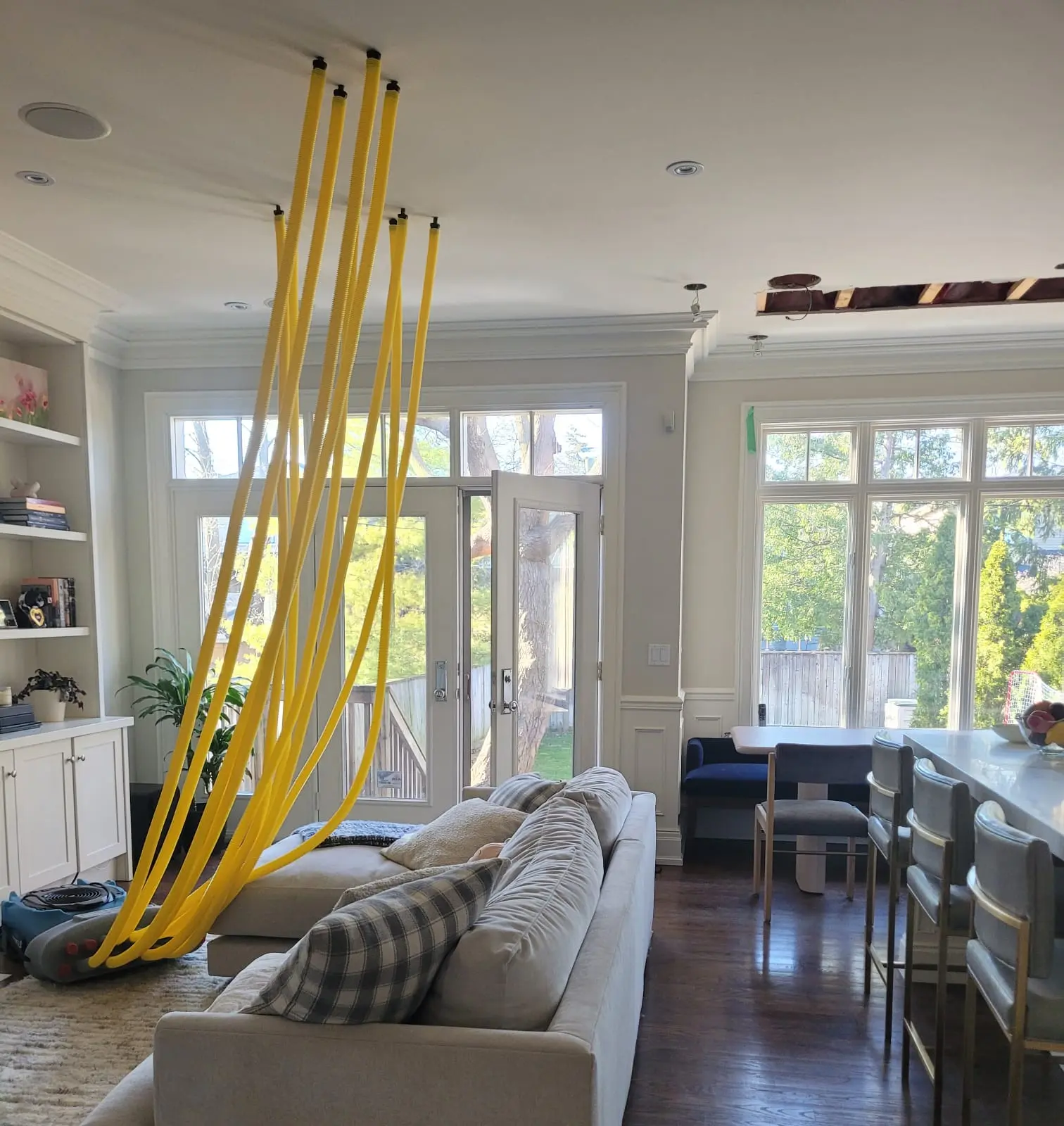
Determine what is needed to mitigate damages and safely restore the affected areas. Air movement and dehumidification are used to create the proper conditions for drying. Industrial air movers and dehumidifiers are added to accomplish this. Removal of selected wet material may be needed for proper air flow, to maximize the rate of evaporation. A quote will be provided for approval for non-insurance work.
Monitoring and Documentation
We will continue to monitor the drying process and document the readings. The equipment will be removed when the affected areas are dry, not just dry on the surface. All insurance claims will include a report of what was damaged and what mitigation was performed, with pictures. An estimate will be submitted to your insurance using their approved format for the mitigation work and repair scope.
We answer
You reach a person, not a voicemail. They can get a crew out to you anywhere in the GTA.
Inspection
We find where the water travelled. Water damage isn't always visible without the proper tools. We use moisture meters and infrared cameras to track damage within the walls, under floors, and anywhere else it has travelled. What remains wet could become mould.
Scope of work
Determine what is needed to mitigate damages and safely restore the affected areas. Air movement and dehumidification are used to create the proper conditions for drying. Industrial air movers and dehumidifiers are added to accomplish this. Removal of selected wet material may be needed for proper air flow, to maximize the rate of evaporation. A quote will be provided for approval for non-insurance work.
Monitoring and Documentation
We will continue to monitor the drying process and document the readings. The equipment will be removed when the affected areas are dry, not just dry on the surface. All insurance claims will include a report of what was damaged and what mitigation was performed, with pictures. An estimate will be submitted to your insurance using their approved format for the mitigation work and repair scope.
Worried the flood caused mould or damaged your floors? See our mould inspection, wet floor drying, and thermal imaging services.
Common questions about flood restoration
How fast do you need to act after a flood?
What does flood restoration actually involve?
Can you restore a badly flooded basement?
Do you bill insurance directly?
What causes most floods in Toronto homes?
Flood restoration across the GTA.
647-563-9966. We pick up 24/7, 365 days a year.
Available 24/7 • Greater Toronto Area • Bills directly to insurance