
Wet Floor Drying
Water in your floors needs to come out fast. The sooner we get there, the better the chance of saving them.
Wet floors are a race against the clock
Wet hardwood is one of the trickiest parts of any flood job. You have got a short window to act before the wood starts to cup, buckle, or grow mould underneath. Once that happens, you are usually looking at a tear-out and full replacement.
We have dried hundreds of floors across Toronto and the GTA. Solid hardwood and subfloor each handle water differently, and each needs a different approach to dry properly.
The difference between saving your floors and replacing them often comes down to how fast you call. A shop vac and a few fans will not cut it. You need drying mats, air movers, and a dehumidifier pulling moisture out of the wood itself, not just the air above it.
Types of floors we work on
- Solid hardwood
- Subfloor and underlay
Wet floors right now?
Call us. We pick up 24/7 and get a crew to you anywhere in the GTA.
647-563-9966What to expect
How we dry your floors
We check how wet they are
Moisture meters tell us exactly how deep the water has gone. We check the surface, the wood itself, and the subfloor underneath. That tells us what we can save and what has to come up.
Standing water comes out first
We pull out any standing water with industrial vacuums before anything else. Wet floors sitting in water will not dry no matter what equipment you put on them.
Drying mats and air movers go in
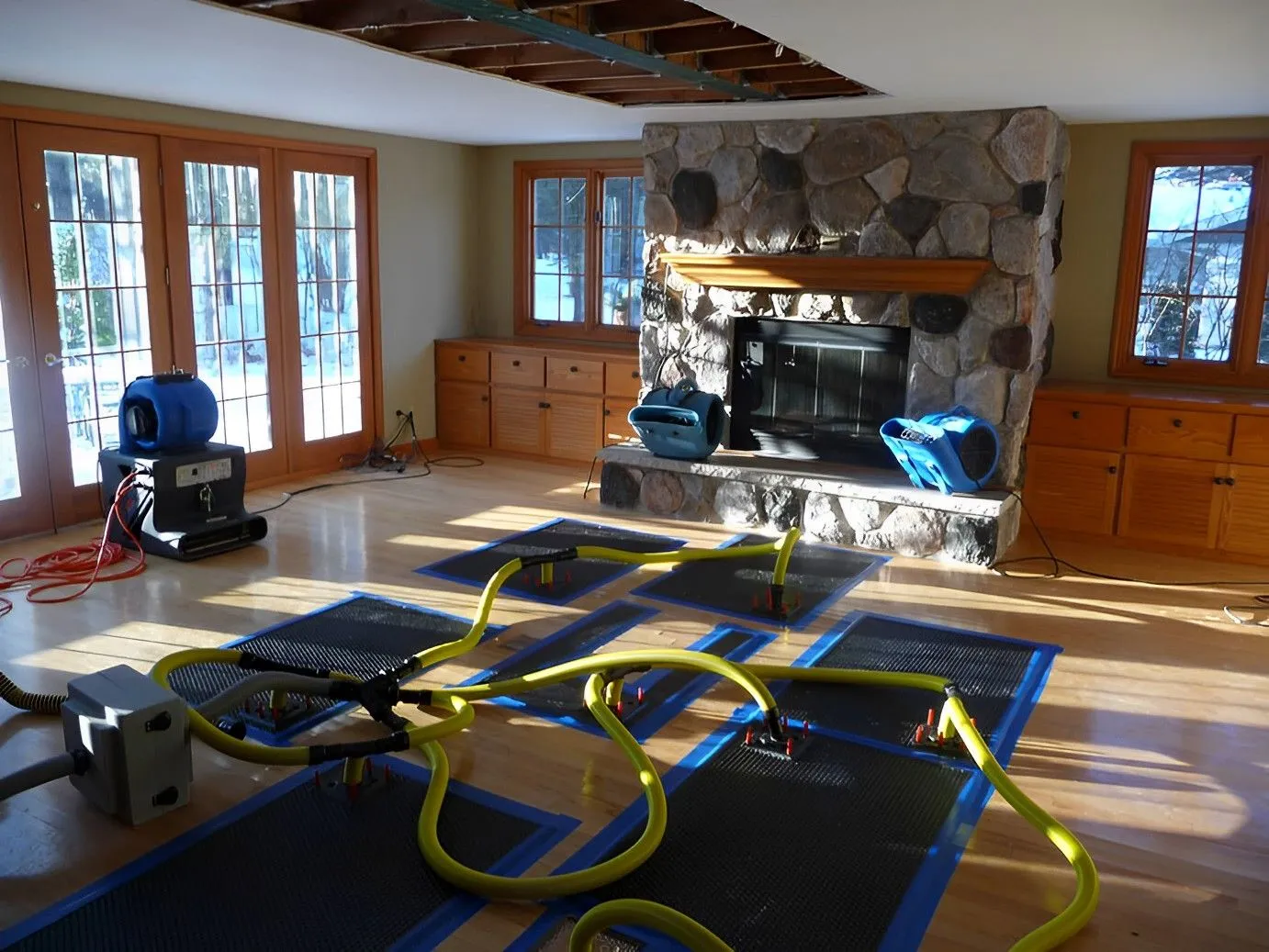
We put drying mats directly on the floor surface. These pull moisture out of the wood from the top down. Air movers and a dehumidifier run at the same time to keep the air dry so the moisture has somewhere to go.
We check back every day
The equipment comes out when the wood reads dry all the way through, not just on top.
We check how wet they are
Moisture meters tell us exactly how deep the water has gone. We check the surface, the wood itself, and the subfloor underneath. That tells us what we can save and what has to come up.
Standing water comes out first
We pull out any standing water with industrial vacuums before anything else. Wet floors sitting in water will not dry no matter what equipment you put on them.
Drying mats and air movers go in
We put drying mats directly on the floor surface. These pull moisture out of the wood from the top down. Air movers and a dehumidifier run at the same time to keep the air dry so the moisture has somewhere to go.
We check back every day
The equipment comes out when the wood reads dry all the way through, not just on top.
Wet floors usually mean there is water elsewhere too. See our water damage restoration and mould inspection services, or read our guide on what to do when your basement floods.
Common questions about wet floor drying
Can wet hardwood floors be saved?
How long does it take to dry a floor after a flood?
What happens if the floors do not dry out properly?
Does insurance cover wet floor drying?
What is the difference between hardwood and laminate when they get wet?
Wet floors?
Call 647-563-9966. We pick up 24/7 and get a crew to you anywhere in the GTA.
Available 24/7 • Greater Toronto Area • Bills directly to insurance