
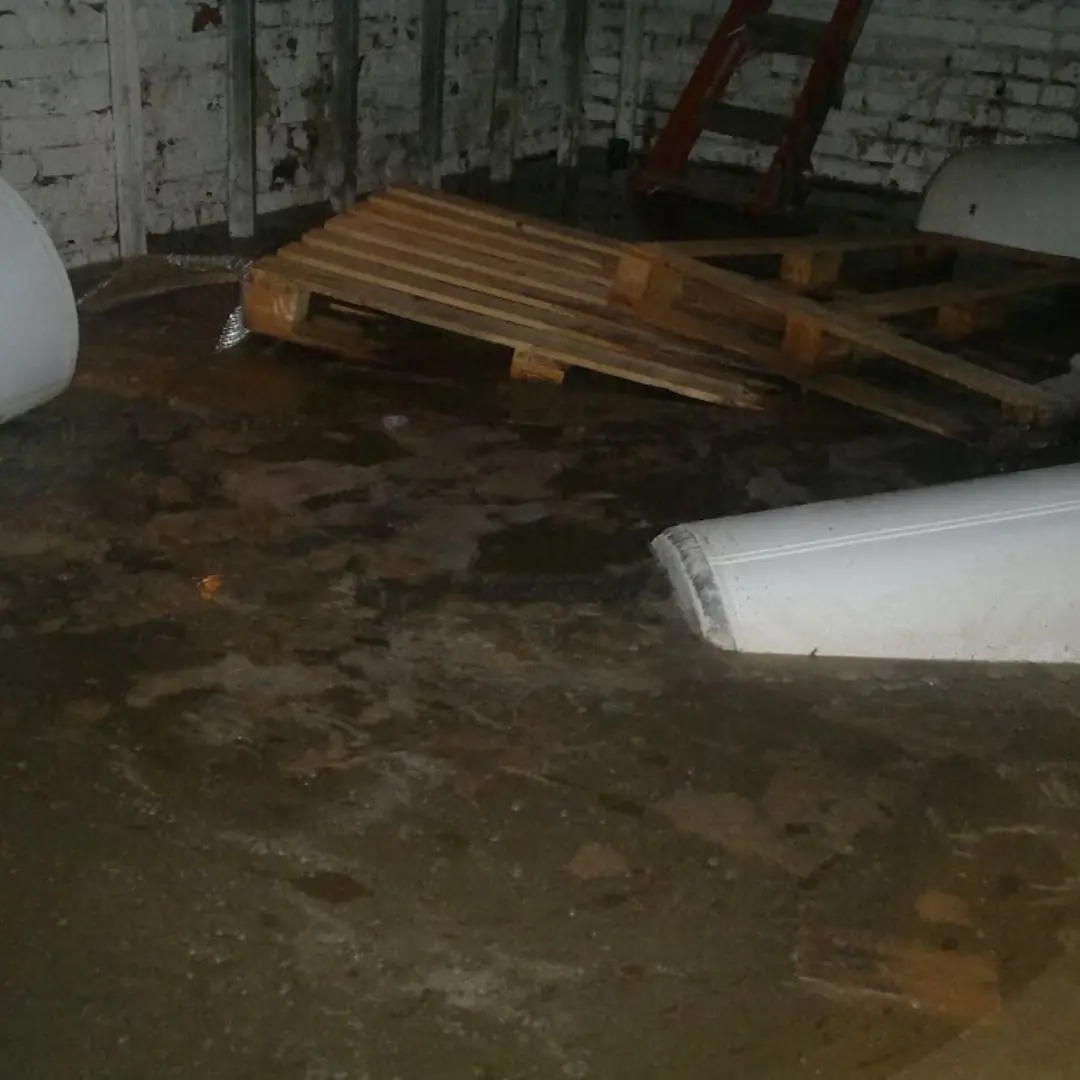
Your basement window well is sitting outside your foundation right now, probably collecting leaves, dirt, and whatever else the wind and rain throw at it. When heavy weather hits, it becomes a funnel that pours water directly at your basement window frame. This is one of the most overlooked water damage sources in Toronto homes.
We get calls about window well flooding every summer, often from homeowners who had no idea their window wells were the problem. The damage inside can be significant: ruined drywall, soaked insulation, growing mould in the wall cavity, and a repair bill that climbs to $5,000 or more by the time all the water damage is addressed. The good news is that window well flooding is preventable if you understand what's happening.
How window wells work (and why they fail)
A basement window well is that metal or plastic box that sits outside below ground level, framing your window opening. Its job is to let light in while keeping water out. The design works like this: water that lands on the well should drain through a perforated pipe at the bottom, down to your weeping tile and then to your sump pump or municipal storm drain.
In theory, it's a sound system. In practice, Toronto-area homes have several problems:
- Blocked drainage: The drain hole at the bottom of the well clogs with silt, leaves, and debris. Water can't escape, so it backs up and sits against your window frame. Once it reaches the window, it finds every small gap in the seal.
- Poor grading around the well: If the soil around your window well slopes toward the house instead of away, all the rain on that side gets funneled into the well. Many older Toronto homes have settled over decades, creating low spots that direct water at the foundation.
- Cracked well structure: Metal window wells rust at the seams. Plastic ones crack or pull away from the foundation in freeze-thaw cycles. Once the well itself leaks, water seeps down the outside of your foundation wall and enters through cracks or mortar joints.
- Leaking window frame: Original basement windows in older Toronto homes were built before weatherproofing standards improved. Even newer windows can fail if they're not sealed properly when installed.
Why August and September are peak season
Late summer brings two hazards. First, we get short, violent thunderstorms that dump 25 to 50mm of rain in minutes. A window well can only drain so fast. When the rain rate exceeds the drain rate, water accumulates. Second, fall approaches and leaves start falling. By late August and into September, window wells fill with decomposing leaves that pack down and create an impermeable mat. Water can't drain at all.
If you haven't looked at your window wells in a few weeks, now is the time to check.
The damage timeline
Water damage from window well flooding follows a predictable and expensive timeline. In the first hour, water enters the basement through the window frame, typically along the sill where the wooden frame meets the sill pan. If the sill pan has cracks or gaps, water goes straight through. If the pan is intact, water travels around the outside and finds the foundation wall, where it seeps in through mortar joints or foundation cracks.
After 4 to 6 hours, the drywall lining your basement gets wet. Most basement walls are framed with drywall that sits directly on the concrete foundation. Once drywall gets wet, it loses its structural integrity and becomes a food source for mould.
After 24 hours, mould starts growing inside the wall cavity if there's any insulation present. The back of the drywall, the insulation, and the rim joist create a perfect environment. You can't see this mould growing. The surface looks dry because the water has migrated into the cavity where the air can't reach it.
By 48 hours, the damage is significant enough that simply drying the surface won't save the materials. You need to open the wall, remove the affected drywall and insulation, treat the framing for mould, and rebuild. A single window well flood can cost $3,000 to $8,000 in water damage remediation, depending on how much wall got wet.
What to do right now if water is coming in
If you've got water in your basement right now or you've discovered standing water around a window well, act fast.
First, pump out any standing water in the well itself using a wet/dry shop vac. Next, create a temporary drain by running a garden hose from the well to the curb or storm drain. This keeps new water from accumulating during continued rain. Then, dry the window frame, sill, and the wall immediately inside. Use fans and a dehumidifier to pull moisture from the area.
If water has already entered your basement through the window, stop the source first, then document the damage with photos and video before moving anything. Check your insurance policy. Most standard policies cover sudden water damage from heavy rain entering through window wells, though you may have a deductible of $500 to $1,000.
Don't assume a basement dehumidifier and some fans will dry out the wall cavity. They won't. If water got into the framing or behind the drywall, you need professional water damage restoration equipment. Mould can start growing in 24 to 48 hours in a wall cavity, and once it starts, surface drying won't stop it.
How to prevent window well flooding
Prevention is where you save money. Here's what actually works:
- Clear the well monthly. Remove leaves, dirt, and debris. This is the single most effective maintenance task. It takes 10 minutes and prevents 80 percent of window well flooding.
- Check the drain. Make sure water flows freely through the drain hole at the bottom of the well. If it's blocked, clear it with a hose and a plumbing snake if needed. Some wells have a removable drain that you can unblock from inside the basement.
- Grade the soil away. The ground around the window well should slope away from the house at least 1 percent grade for the first 6 feet. If it slopes toward the house, add soil and regrade. Cost for this is $200 to $500 per window.
- Install a window well cover. A metal or polycarbonate cover keeps leaves and large debris out while still letting light in. Cost is $150 to $400 per window, depending on quality. Covers also keep animals out of the well. They do reduce light slightly, but they work well.
- Extend your downspouts. Roof runoff should discharge at least 6 feet away from the foundation, and ideally directed away from any window wells. A downspout extension that dumps water right at your window well will fill it in minutes during heavy rain.
- Reseal the window frame. If your basement window is original and more than 20 years old, have it resealed by a contractor who knows what they're doing. Cheap caulk fails in freeze-thaw cycles. Proper sealing uses exterior-grade silicone and is done from the outside. Cost is $50 to $150 per window.
When to call for professional help
If water damage has already happened, if mould is present, or if the window well itself is damaged and needs replacement, don't DIY it. Window well replacement and foundation waterproofing near the well usually requires a contractor. We see homeowners try to patch a rusted well from the inside, and it never works. The well has to be removed from outside, the foundation sealed, and a new well installed. This is a $1,500 to $3,500 job depending on the well size and how much foundation work is needed.
If you're in North York, Etobicoke, Scarborough, Mississauga, Vaughan, Markham, or anywhere across the GTA, window well flooding happens the same way. The solution is prevention and quick response when water appears.
The bottom line
Window wells are cheap insurance against expensive basement water damage. A $300 cover and 10 minutes of monthly maintenance will prevent a $5,000 remediation project. For homes in clay-rich GTA soil where water doesn't drain naturally, and for older Toronto houses where grading has settled, window well maintenance becomes even more important.
Check your window wells this week. Clear the debris. Test the drain. Grade the soil. If water has already caused damage, or if you need help assessing the condition of a window well and the foundation around it, call us. We do window well evaluations as part of our foundation inspection service, and we can tell you exactly what needs to happen to stop the water.
If your basement window is leaking or standing water is building up in a window well, call 647-563-9966. We'll help you dry it out and figure out how to keep it from happening again.
The Preferred Group
IICRC Certified restoration team. Toronto-based, working across the GTA since 2006. 6,000+ projects under our belt.