
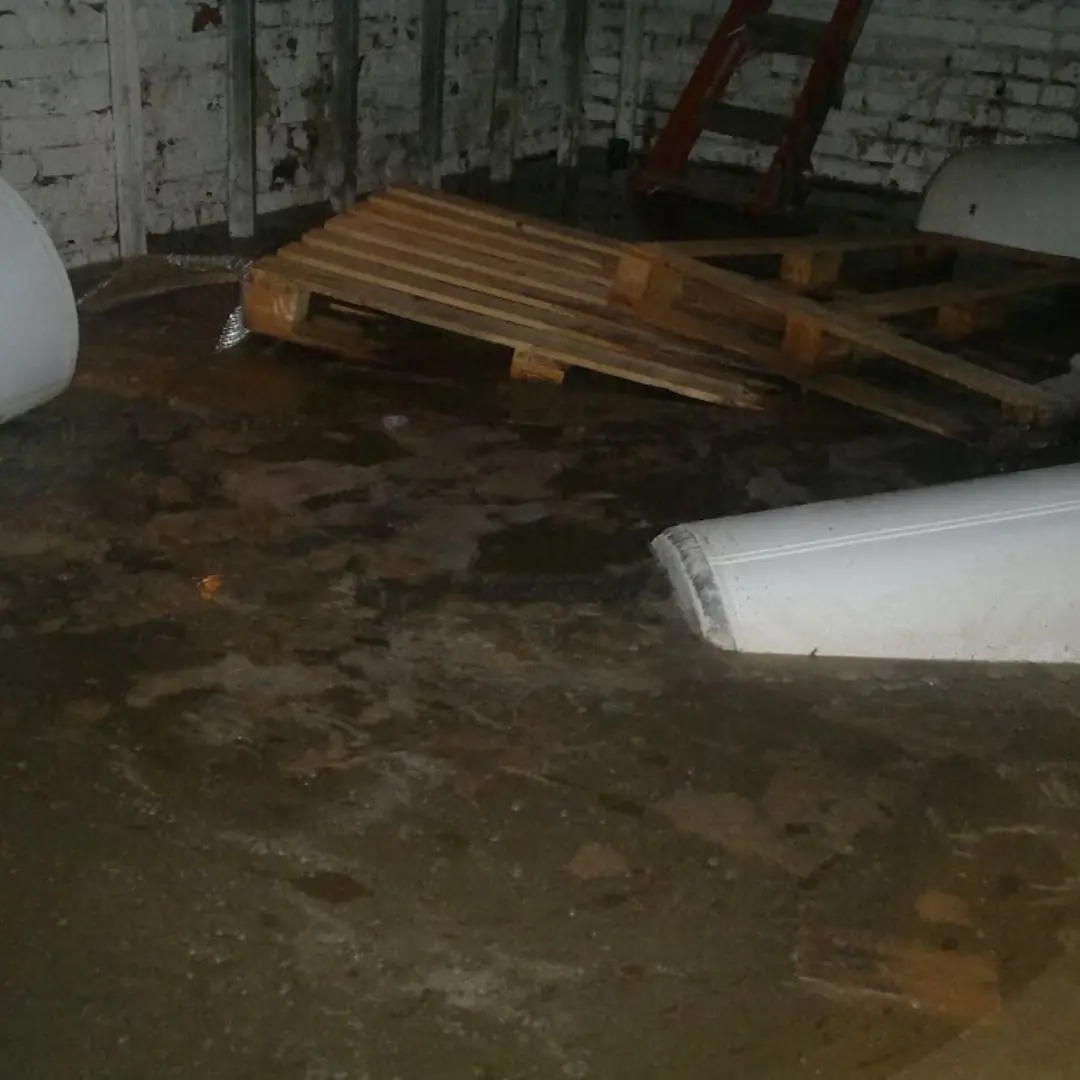
If a pipe is actively spraying water in your home right now, put down your phone after reading the next paragraph, find your main water shutoff, and close it. Everything else can wait.
The main water shutoff is usually in your basement, near the front wall where the supply line comes in from the street. Twist the valve clockwise until it stops. That single action will save you thousands of dollars. Then call a plumber and a water damage restoration company. In that order.
Why the Fall Freeze Causes Burst Pipes in Toronto Homes
October brings the first freeze to the GTA. For most homes, that's not a problem. But for older Toronto properties with exposed pipes in uninsulated crawl spaces, attics, or walls that don't get heated, water inside them starts to freeze as soon as the temperature drops below zero.
Water expands when it freezes. A pipe that's half full of water will burst from the inside as ice forms. You get a small pinhole first, then a rupture, and then an hour later you're standing in two inches of water in your basement or walls.
Toronto homes built before 1980 are especially vulnerable. Victorian semis in Parkdale, postwar bungalows in Scarborough, century homes in Cabbagetown, older detached houses in North York. Many still have original supply lines running through exterior walls or uninsulated spaces. The first hard freeze doesn't just damage one pipe. It can rupture two or three.
The First 20 Minutes: What Actually Matters
A burst 0.5-inch supply line can dump 100 to 120 litres of water into your home every single hour. That's a bathroom's worth of water every 60 minutes. If you don't catch it fast, you're not dealing with a water damage problem. You're dealing with a basement flood, ruined flooring, soaked insulation, and mould growing inside your walls by tomorrow morning.
Here's what to do if you spot a burst:
- Step 1: Close the main water shutoff. This is not a suggestion. Find it, turn it, stop the water. Do not try to patch the pipe. Do not turn on the dehumidifier. Do not call your insurance company first. Stop the water. Everything else follows from that one action.
- Step 2: Open a cold water tap upstairs. This relieves the pressure trapped in the system and lets water drain out through the lowest point instead of continuing to spray from the burst. It sounds backwards but it works.
- Step 3: Call a plumber right now. Then call a water damage restoration company. Not tomorrow. Not after you get the plumber's price quote. Now.
- Step 4: Document everything with photos and video. Take video from every angle showing where the burst is, what water has spilled, what's wet, what's damaged. Do this before you move anything. This video is your insurance claim.
Why the Cost Explodes After the First Hour
A burst pipe that's caught immediately and dried properly might cost 3,000 to 5,000 CAD in water damage restoration, plus plumbing repair. That's expensive but manageable.
Wait six hours and mould starts growing inside the walls. The drywall gets saturated. Insulation absorbs water and loses its R-value. Wood framing gets wet. At 24 hours, you're looking at full wall removal and replacement on top of the water damage bill. Call it 8,000 to 15,000 CAD.
If you don't catch it and the water sits for 48 hours or longer, structural damage starts. Subfloor rot, compromised framing, extensive mould remediation required. You're now in the 20,000 to 40,000 CAD range. Some homes we've worked on went higher.
The difference between 3,000 CAD and 20,000 CAD is literally the speed of your response. That's why we say it over and over: call immediately.
Where Pipes Fail Most Often in Toronto Fall Freezes
Not every pipe in your house will burst when the temperature drops. The ones that do are usually in uninsulated spaces:
- Exterior walls: Especially the north and west sides of the house where sun never reaches and cold air pockets form.
- Crawl spaces and band joists: If your home has a crawl space or exposed joist area, pipes running through there are the first to freeze.
- Attic supply lines: Some older Toronto homes ran hot water lines through the attic. These freeze fast because there's zero insulation and the air is moving.
- Basement rim joists: Where pipes exit the basement through the foundation wall to reach the main floor, the transition zone freezes hard.
- Exposed pipes under sinks: Kitchen and bathroom cabinet pipes on exterior walls get hit early.
Prevention: The Real Insurance Policy
If you live in an older Toronto home or a property with pipes in uninsulated spaces, prevention saves far more than repair ever will.
- Insulate exposed pipes now: Pipe wrap and foam sleeves cost 20 to 50 CAD per pipe. Installing them takes an hour and prevents most freeze damage.
- Caulk and seal gaps in exterior walls: Stop cold air from reaching pipes in the first place.
- Keep cabinet doors open on cold nights: Let warm air from inside the house circulate around pipes under sinks.
- Drip your taps on the coldest nights: Moving water doesn't freeze as easily. If temperatures drop below minus-15 Celsius, open your taps slightly and let them drip overnight.
- Keep your heating at a minimum even when you're away. Never set the thermostat below 10 degrees Celsius in October through April. A 2,000 CAD plumbing repair bill makes that electricity cost look trivial.
You Caught the Burst. Now What?
Your main water is off. A plumber is on the way to repair the burst. A restoration company is coming to dry out the water. While you wait, here's what you should do:
Move high-value items away from the wet area if it's safe to do so. If water is on the floor, get shoes on and use towels to push it toward floor drains. Open windows to start air movement, but do not run a regular household fan yet. Do not use a regular household vacuum on the wet area.
Mop up surface water if you can, but don't waste energy on that. Your priority is getting the crew there. Industrial drying equipment and dehumidifiers will handle the rest. A regular person with a mop can mop for eight hours and still not dry what professional equipment dries in two hours.
One More Thing About October Burst Pipes
We get maybe two weeks in October where the freeze risk is high but people haven't yet accepted that winter is coming. That's when most burst pipes happen. The temperature drops, people don't expect it, pipes freeze, no one catches it in the first hour, and suddenly we're in full remediation mode in October when the weather is still pleasant.
If you live in an older Toronto home with exposed pipes, this is the week to check on them. Walk your basement and crawl spaces. Feel pipes in uninsulated areas. Insulate the vulnerable ones. It's the cheapest insurance you'll ever buy.
If your pipe has already burst and water is flowing, close the main shutoff and call us at 647-563-9966. We'll send a crew out to dry before the mould starts growing.
The Preferred Group
IICRC Certified restoration team. Toronto-based, working across the GTA since 2006. 6,000+ projects under our belt.