
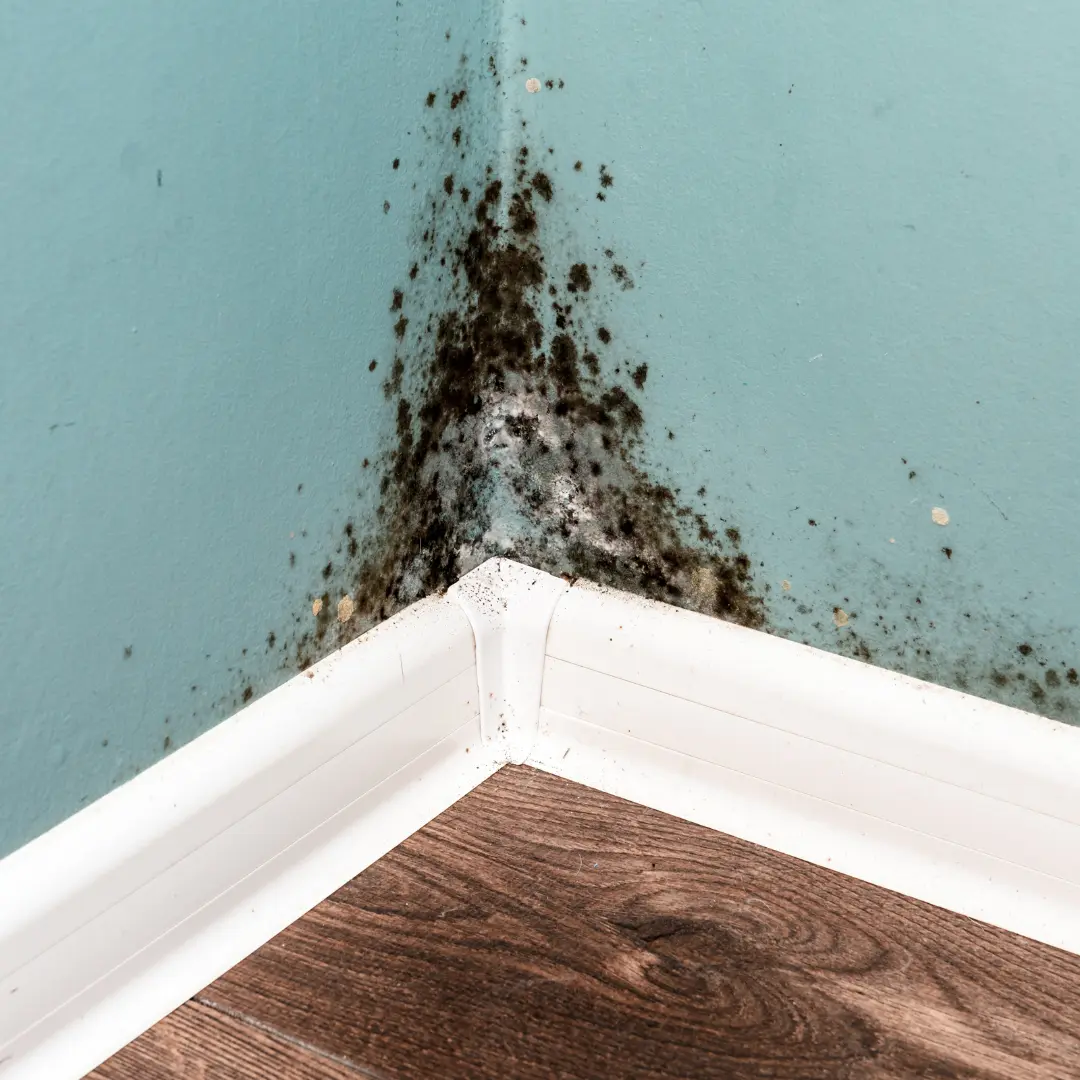
Mould remediation is one of the most common calls we get in May across the GTA. Spring flooding season brings the water in, and then about 24 to 48 hours later, the mould follows. If your home had any water damage in the past few weeks, from a sump pump failure, drain backup, or water pushing through the foundation during those heavy spring rains, keep reading. What you find out in the next few days matters a lot.
Why mould grows so fast after water damage in Toronto homes
Mould spores are already in the air in every home. That's normal and unavoidable. What they need to become a real problem is moisture and a porous surface to grow on. After a flood, you have both.
In Toronto in May, you've also got ideal temperatures. Mould grows fastest between 15°C and 30°C, which is exactly what basements in the GTA sit at right now. Give mould wet drywall, wet wood framing, or wet insulation in those conditions, and you can have visible growth within 24 to 48 hours. Inside a wall cavity where drying is much slower, it can grow for weeks without you ever seeing it from the surface.
The postwar bungalow stock in Scarborough, Etobicoke, and North York is particularly vulnerable. These homes typically have fiberglass batt insulation sitting against the foundation wall, wood framing at the perimeter, and drywall running all the way down to the floor. Water gets in, saturates the batt, and you've got a mould problem inside the wall well before the carpet feels dry on the surface.
What mould actually smells like
This is the question we get most often, and it's a fair one. Mould has a distinctly musty, earthy smell. Some people describe it as a wet dog that never fully dried. Others say it smells like old books, or like the inside of a cottage that's been closed up all winter.
The smell tends to be strongest in the morning, right when you open a closed space. If you come downstairs first thing and get hit with a musty note that wasn't there before the flooding, take it seriously.
A few things worth knowing:
- Some moulds produce a sharper smell, closer to ammonia or something chemical. It's less earthy and more harsh.
- Mould behind drywall often smells strongest right at electrical outlets and along baseboards, where there are small gaps in the wall assembly that let air through.
- Smell is not a reliable indicator of quantity. A small mould colony inside an HVAC return can push a lot of spores through the whole house without a strong localized smell.
If your basement smells musty after a recent flood and it didn't before, assume mould is growing somewhere until you can confirm otherwise. Don't wait.
Where to look after water damage in Toronto homes
After a flood, these are the spots that consistently harbour mould and consistently get missed:
- Drywall at the base of basement walls. Water wicks up drywall fast, often 30 to 40 cm above the visible waterline. The paper face and gypsum core can stay wet for days even after the surface looks and feels dry.
- Behind baseboards and under flooring. Pull the baseboard off and check the wall behind it. Lift a corner of vinyl plank or laminate. Both are common spots where water sits undetected for days.
- Fiberglass batt insulation in the wall cavity. Batt holds moisture for a long time. You usually can't assess this without opening the wall. If water reached the base of an insulated perimeter wall, assume the batt is compromised.
- The wood subfloor. If water got under your finished flooring, the OSB or plywood subfloor underneath absorbs moisture quickly. Look for discoloration, swelling, or soft spots when you walk across it.
- HVAC ductwork and the air handler. If the furnace or the floor-level return air ducts sat in standing water, mould inside the HVAC system can spread spores to every room in the house. This one can't wait.
- Closets on exterior walls. These run colder and damper than the rest of the house on their own. Add any water intrusion and they become reliable mould spots.
Use a bright flashlight and get close. Early-stage mould can look like a light grey or green dust, or small dark specks that are easy to mistake for dirt. A cheap moisture meter from any hardware store can help you confirm wet areas that look dry on the surface.
What you can clean yourself and what you can't
Health Canada's guidance, and the IICRC standards that certified restoration teams follow, generally put the DIY threshold at 10 square feet or less of visible surface mould on a hard, non-porous material. Think: ceramic tile, sealed concrete, a metal drainpipe, glass.
For that kind of small surface mould, undiluted white vinegar applied with a spray bottle, left for 30 minutes, then wiped off, is genuinely effective. Let the surface dry fully. Commercial mould sprays with active antifungal agents work well too.
What you should not attempt yourself:
- Mould on drywall, wood framing, or insulation. These are porous materials. Surface cleaning does not kill the mould that has grown into the material itself. Partial treatment on porous materials usually just masks the problem for a few weeks.
- Any area larger than 10 square feet. At that point the spore count in the air during removal becomes genuinely hazardous without proper containment and respirators.
- Mould inside an HVAC system. Disturbing mould in ductwork without containment pushes spores throughout the whole house.
- Any situation where you suspect wall cavities are involved. If you can see mould on the surface of the drywall, assume there's more inside the wall.
- Any home with someone who has asthma, allergies, or a weakened immune system. Mould spore exposure during even a small DIY cleanup can trigger serious respiratory responses.
What mould remediation Toronto jobs actually involve
A proper mould remediation job follows a clear process. Here's what it looks like when done right.
It starts with moisture mapping. Before anything gets removed, our crew uses thermal imaging cameras and moisture meters to find exactly where the wet areas are, including inside walls. You cannot fix a mould problem without first confirming the source of moisture is gone and mapping the full extent of what's wet.
Then containment. The affected area gets sealed off with polyethylene sheeting and put under negative air pressure. This keeps spores from spreading to the rest of the house while we work. HEPA-filtered air scrubbers run the entire time.
Removal comes next. Affected porous materials, drywall, insulation, and sometimes subfloor sections, get cut out, double-bagged, and removed. On wood framing that has surface mould but is structurally sound, we use soda blasting or dry-ice blasting to take the surface back to clean wood, then treat with an antifungal agent.
After that, clearance testing. An independent air quality test confirms that spore counts are back to baseline levels before the space gets closed back up. A restoration company that skips this step is cutting a corner you'll notice later.
For a typical basement perimeter wall with a 200-square-foot affected area, the full process takes two to four days. Mould remediation cost in Toronto for a job that size generally runs $1,500 to $6,000 depending on materials involved, the extent of cavity contamination, and whether subfloor needs to come out.
What insurance covers (and what it doesn't)
If your mould problem is a direct result of a covered water damage event, a burst pipe, an appliance failure, or a sewer backup if you have the add-on rider on your policy, your insurer will typically cover mould remediation as part of the same claim. Keep all your documentation from the original flood. Photos, video, the date you noticed it. That timeline matters.
Insurance generally will not cover mould that developed from long-term moisture intrusion, a slow leak you didn't report, or a ventilation problem. The key word adjusters look for is "sudden and accidental." A flood from a defined event that you reported promptly is in a much better position for coverage than mould that clearly built up over months.
If you're working through a claim and need a scope of work for your adjuster, we can help with that. We do direct insurance billing, so you're not managing the back-and-forth yourself.
Don't give it a week to see what happens
The most expensive mould remediation jobs we handle are the ones where a homeowner waited. A week after a flood, what could have been a straight drywall removal and drying job becomes a subfloor replacement, a framing treatment, and sometimes an HVAC cleaning. The remediation cost can triple or quadruple.
If your basement flooded in the last two weeks and you're noticing any musty smell, any visible spots on walls or flooring, or any soft spots underfoot, call us at 647-563-9966. We serve Toronto, Mississauga, Markham, Vaughan, Oakville, Richmond Hill, Scarborough, North York, and Etobicoke. Someone picks up every time, any hour.
The Preferred Group
IICRC Certified restoration team. Toronto-based, working across the GTA since 2006. 6,000+ projects under our belt.