
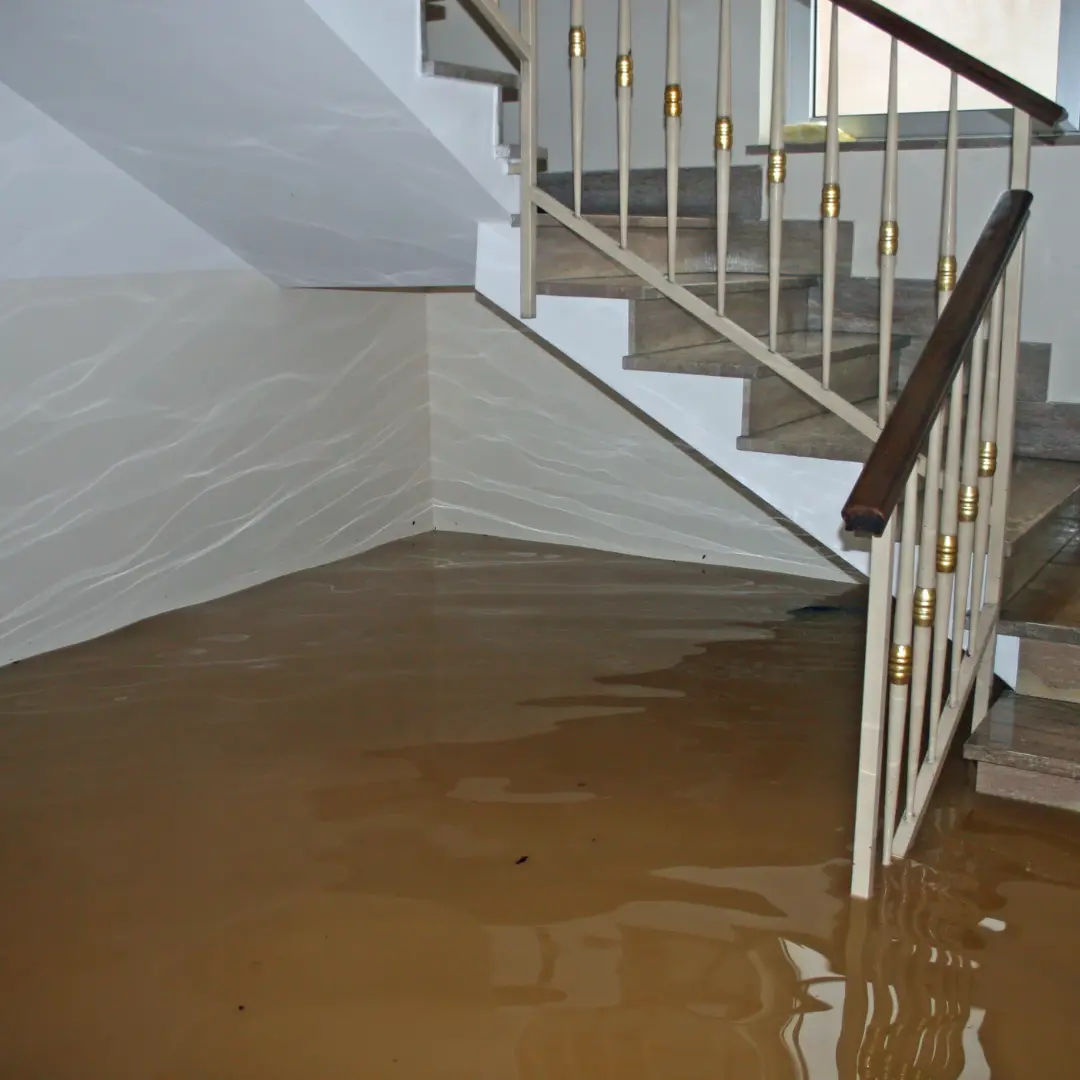
If sewer backup has come up into your basement tonight, the single most important thing you can do is call a restoration company before you go to sleep. Not tomorrow morning. Tonight. After years responding to sewer backup calls across Toronto, Scarborough, Etobicoke, and the rest of the GTA, we can tell you plainly: every hour you wait changes what we can save, and how much the job costs.
This post explains what actually happens inside your home in the first 24 hours after a sewer backup, why the costs escalate so fast, and what to do right now.
Sewer backup is a Category 3 water event from the first minute
The IICRC (the body that certifies professional restoration crews) classifies water damage into three categories. Category 1 is clean water from a supply line or appliance. Category 2 is grey water, like a washing machine overflow or a toilet overflow without solids. Category 3, sometimes called black water, is sewage.
Sewer backup is Category 3 from the moment it comes up through your floor drain. It contains fecal coliform, E. coli, salmonella, hepatitis A, and a range of other pathogens. This is not a classification that changes over time. It starts there and stays there. The reason it matters is that Category 3 contamination requires a completely different cleanup protocol: full personal protective equipment, containment of the affected area, decontamination of all surfaces, and disposal of any porous material that absorbed the water.
That protocol is the same whether we arrive at hour two or hour twenty-six. But what changes dramatically is how much material has been contaminated by hour twenty-six.
What the sewage is doing inside your walls right now
The thing most homeowners don't realize is that sewage water wicks into porous building materials almost immediately. Standing water on a concrete floor is a problem. But the water that soaks into the bottom three feet of drywall, gets absorbed by OSB subfloor panels, or travels up through the wood framing is the part that drives restoration costs.
Drywall is essentially a paper-wrapped gypsum sponge. The bottom panels in a basement will absorb contaminated water up the wall within a few hours. That material cannot be decontaminated. It gets cut out. The framing behind it, if it's still surface-wet and caught early, can often be treated with a HEPA vacuum, antimicrobial spray, and aggressive drying. If it's been sitting for 24 hours, the wood has absorbed enough contamination that we typically have to cut it out too.
Insulation is almost always unsalvageable after contact with sewage, regardless of timing. But the question of whether we're replacing just the insulation and drywall, or also the OSB subfloor and framing, is almost entirely determined by how quickly we get there.
The actual cost difference between same-day and next-day response
Here's how the numbers tend to break down on a typical Toronto basement sewer backup in a postwar semi or bungalow:
Same-day response (under 6 hours): We extract the standing water, remove and bag the contaminated drywall, treat framing surfaces, set up air movers and dehumidifiers, and run drying equipment for three to five days. Total cost typically runs $3,000 to $6,000, depending on square footage and how much content was affected. This is usually fully covered by sewer backup insurance riders.
24-48 hour response: At this point, framing is more likely contaminated and has to come out. The OSB subfloor panels are often saturated enough to require replacement. We're now pulling out structural components, not just drywall and insulation. Total cost moves into the $8,000 to $15,000 range and the job takes two to three weeks because reconstruction is involved.
Over 48 hours: Mould has started growing in the wall cavities. Now the job includes a full mould remediation on top of the structural tearout and rebuild. Jobs that could have been resolved for $4,000 are now $20,000 or more. We've seen it happen in Vaughan, Markham, North York, all over the GTA.
Mould starts before you can smell it
This is the part that surprises people most. In a Toronto July, when your basement is warm and the humidity is high, mould spores can begin colonizing wet drywall in 24 to 48 hours. You won't smell it yet. You definitely won't see it. It's growing on the back face of the drywall, inside the wall cavity, in the insulation batts.
By the time you see a dark patch on your wall or smell that musty, earthy odour, you already have an established mould colony. At that point, you need both the structural water damage repair and a separate mould remediation. The remediation adds time, cost, and in some insurance policies, it's a separate claim or sub-limit from your water damage coverage.
The window to prevent mould after a sewer backup is roughly 24 to 36 hours. That window closes fast.
Your insurance claim gets harder the longer you wait
Most Ontario home insurance policies that include sewer backup coverage have language requiring the policyholder to take "reasonable steps to prevent further damage." Courts and adjusters interpret this differently, but waiting two days before calling anyone is a documented failure to mitigate. We've seen adjusters use this language to deny portions of claims, especially when the expanded damage (mould, additional structural loss) was clearly avoidable.
Document the backup immediately. Shoot video from the doorway without entering the space. Call your insurance company the same day. Call a certified restoration company the same day. Our drain backup and water damage restoration team handles direct insurance billing, so you're not managing a back-and-forth between your insurer and the contractor. We coordinate that for you.
Why Toronto homeowners are especially vulnerable in summer
A big part of the GTA's older housing stock, especially in Toronto proper, sits on combined sewer systems where storm water and sanitary sewage share the same pipe. Neighbourhoods like Riverdale, Leslieville, Roncesvalles, the Annex, and older parts of Scarborough and Etobicoke are on these combined systems.
When a summer thunderstorm drops 40 to 70mm of rain in 60 to 90 minutes (which happens multiple times every July and August), the combined system can't handle the volume. Water has nowhere to go but back up through the lowest point in your home, which is your basement floor drain.
These events typically happen at night, during storms. The basement smells off in the morning, you open the door and see an inch of sewage water on the floor, and the instinct is to wait until a reasonable hour to make calls. We completely understand that instinct. But that delay from 11pm to 9am is already 10 hours of contamination spreading into your walls.
We pick up at 2am. We pick up on long weekends. That's the entire reason we operate 24/7.
What to do right now if you have sewage in your basement
Keep it simple:
- Don't enter the space. No rubber boots, no shop gloves. Sewage is a biohazard and you need proper PPE to be in there safely. Shoot video from the doorway.
- Stop all water use in the house. No flushing, no running taps, no dishwasher. Adding more water into the system will push more sewage up through the drain.
- Document from outside the space. A two-minute video from the doorway is your insurance claim. Do this before anything else moves.
- Call a restoration company immediately. Not tomorrow. Tonight. Every hour matters for what we can save and what the job costs.
- Then call your insurance company. Same day. Start the claim now so there's a timestamp on your mitigation efforts.
The math on this is straightforward. A phone call at 11pm and a crew on-site by 1am is a $4,000 job. The same backup discovered in the morning after a full night of sitting is a $12,000 job. Waiting because it feels wrong to call late at night is the single most expensive mistake we see Toronto homeowners make.
Call us at 647-563-9966. We're IICRC certified, we work across the GTA, and someone picks up every hour of every day. If sewage has backed up into your basement, that's the call to make right now.
The Preferred Group
IICRC Certified restoration team. Toronto-based, working across the GTA since 2006. 6,000+ projects under our belt.